The Question Everyone Asks When They See the Quote
You've had a designer over, you've got a 3D render you like, and then the quote comes back with two numbers: one for a laminate finish, one for a veneer finish. The veneer option is AED 3,500 more on a three-door wardrobe. The designer says "veneer looks more premium." The WhatsApp group says "laminate is fine, don't waste money." Which is actually right?
Answer, honestly: it depends on which specific laminate, which specific veneer, how your apartment handles humidity, and how long you plan to keep the wardrobe. This guide gives you the real comparison with 2026 Dubai pricing, UAE-specific performance data, and a straight recommendation by use case.
Getting the Definitions Right First
Half the arguments about "veneer vs laminate" happen because nobody agrees on what the words mean. Four finishes are usually on the table in a Dubai bespoke wardrobe project.
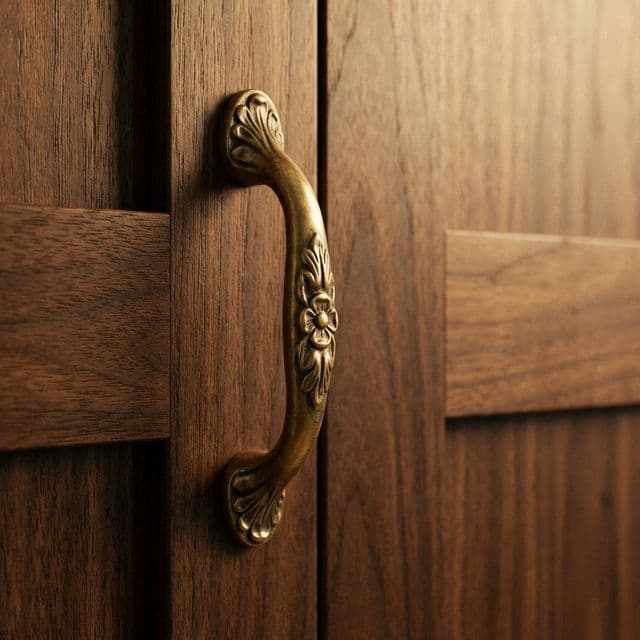
Real wood veneer. A thin sheet (0.5-3 mm) of real wood, pressed and glued onto an MDF or plywood core. It's real timber. Grain, texture, and color variations are natural. Walnut, oak, and teak are the most common species in UAE projects.
Melamine-faced chipboard or MDF (standard laminate). A printed decorative paper impregnated with melamine resin and pressed onto a chipboard or MDF core. This is what most budget and mid-range UAE wardrobes are made of. The print can imitate wood, stone, or solid colors.
High Pressure Laminate (HPL). Same printed paper idea but pressed at much higher pressure with multiple kraft paper layers underneath. Significantly tougher than standard melamine. Brands like Formica and Greenlam dominate the UAE HPL market.
Acrylic finish. A layer of high-gloss or matte acrylic (typically 1-2 mm) bonded to an MDF core with a PUR adhesive. Delivers a mirror-smooth, seamless finish. Brands like Senosan from Austria and Rehau from Germany set the quality benchmark.
There's a fifth option, painted lacquer, which sits between veneer and acrylic in price but requires a different maintenance regime. We'll touch on it but it's less relevant to the laminate-vs-veneer question specifically.
Cost Per Linear Meter (2026 Dubai)
Prices assume a standard 2.4 m high wardrobe with doors, carcass, and basic Blum soft-close hardware. VAT excluded.
As a broad guide, wardrobe finishes in Dubai run from around AED 1,600 up to AED 5,500 per linear metre depending on which one you pick. Rather than pricing off a table, here is how the options compare.
| Finish | Relative Cost | Notes |
|---|---|---|
| Standard melamine laminate | Lowest | Entry tier, widely available |
| High Pressure Laminate (HPL) | Low-Medium | Durable step up from melamine |
| Real wood veneer (local species) | Medium-High | Oak, walnut, ash |
| Real wood veneer (premium species) | High | Smoked oak, zebrano, fumed eucalyptus |
| Acrylic (German/Austrian brands) | High | Gloss or matte |
| Painted lacquer (spray finish) | Medium-High | Unlimited colors |
On a typical three-door wardrobe, the finish choice is genuinely the biggest lever on the final price. That is the real decision you're making.
Every wardrobe is different, so we don't quote off a table. Send a photo and the rough wall width on WhatsApp and we'll come back with design ideas and an exact, itemised price — or book a free measurement.
Humidity Performance in UAE Conditions
This is where UAE wardrobes diverge from European reviews online. Indoor humidity in Dubai apartments runs 50-65% when AC is on, and spikes to 75-85% when it's off for a long weekend. Coastal areas like Dubai Marina, JBR, and Palm Jumeirah run higher. This matters a lot.
| Finish | Humidity Resistance | Real-World Failure Mode |
|---|---|---|
| Standard melamine laminate | Moderate | Edge swelling, edge band peeling after 3-6 years |
| HPL | High | Very stable, minor edge risk only if cheap edge band used |
| Wood veneer | Moderate-High (if sealed) | Lifts at edges if sealing coat wears thin |
| Acrylic | High | Very stable surface, fails at edges if PVC edge band ages |
| Painted lacquer | Moderate | Hairline cracks at door edges in humid cycling |
The single biggest determinant of long-term humidity performance isn't the face finish. It's the edge banding. A cheap 0.4 mm PVC edge band will fail on any finish. A 2 mm ABS edge band bonded with PUR glue will hold on all of them. When comparing quotes, ask specifically about edge band thickness and glue type.
Scratch, Heat, and Daily Wear
Wardrobes don't deal with heat much, but doors get scratched by rings, bag buckles, and kids.
Best scratch resistance: HPL, then standard melamine, then acrylic matte, then acrylic gloss, then wood veneer, then lacquer. HPL is genuinely hard to scratch with everyday contact.
Worst for showing scratches: High-gloss acrylic and high-gloss lacquer. Dark gloss shows every fingerprint, every micro-scratch, every wipe mark. Beautiful in a showroom, a maintenance job in real life.
Best for hiding wear: Matte wood veneer and HPL with woodgrain texture. Natural grain visually absorbs minor marks.
Heat: Not a major wardrobe issue unless you have a wardrobe next to a window getting direct afternoon sun. In that case veneer and lacquer handle sustained heat better than acrylic, which can show minor surface distortion at very high temperatures over years.
Repairability: The Factor Most Buyers Ignore
This is where veneer genuinely earns its price.
Wood veneer is repairable. A deep scratch or dent can be sanded, restained, and re-sealed locally. A skilled carpenter can make a 10-year-old veneer wardrobe look near-new for AED 300-800 per door. Species-matched repair is realistic.
HPL and melamine laminate are not repairable. A deep scratch or chip on a laminate door cannot be sanded out, because the decorative layer is paper-thin. Your options are: live with it, replace the whole door (AED 400-1,200 per door if the range is still stocked), or replace the whole wardrobe. If the laminate range is discontinued, you're replacing the whole unit.
Acrylic can be polished but not sanded through. Light scuff marks can be buffed out with cutting compound and a machine polisher. Deep scratches cannot. A damaged acrylic panel is a full panel replacement.
Lacquer is repairable. A skilled spray painter can match and respray a damaged panel. Cost: AED 600-1,500 per door. Color matching on older lacquer can be tricky.
For a wardrobe you plan to keep 15+ years, repairability is a genuine financial factor. It's the main reason people willing to spend AED 25,000+ often pick veneer.
How to Tell Them Apart in a Showroom
Salespeople occasionally blur the lines. Here's how to verify what you're actually being sold.
Is it real veneer? Look at the edge of the door. Real veneer shows the core MDF or plywood with a thin wood strip wrapped over. Look at two doors in the same "walnut" range side by side. Real veneer will show slight grain variation between doors. Identical grain = it's printed laminate.
Is it HPL or standard melamine? Press a fingernail firmly into a sample corner. HPL won't mark. Standard melamine often shows a faint dent.
Is the acrylic real brand acrylic or a cheap equivalent? Brand acrylic comes with a printed protective film on delivery, and the brand name is visible on the offcut edges. Ask to see an offcut. If the supplier can't show you branded offcuts, it's likely a Chinese generic acrylic, which ages differently.
Quick lighting test: Real high-gloss acrylic reflects light like a mirror, almost no orange peel texture. Lacquer sprayed in a workshop almost always shows subtle orange peel under a raking light. Cheaper "gloss laminate" has a thin plastic sheen, visibly different from acrylic when you tilt the sample.
10-Year Total Cost of Ownership
Let's compare a 2.4 m wide, 2.4 m high wardrobe over a realistic 10-year ownership period in a Dubai apartment.
| Factor | Why it matters | Impact on 10-year cost |
|---|---|---|
| Initial finish cost | Sets the starting point before any repairs | High |
| Repairability | Veneer and lacquer can be sanded, restained, or resprayed locally; laminate and HPL cannot | Medium |
| Likely replacement | Laminate is more likely to need a door replaced within 10 years; HPL, veneer, and lacquer rarely need one | Medium |
| Edge band quality | A cheap edge band drives up repair frequency regardless of finish | High |
HPL genuinely comes out as the value winner over a decade, since it rarely needs repair or replacement despite a moderate starting cost. Veneer and lacquer justify their higher starting cost on repair economics — both can be restored rather than replaced. Acrylic tends to have the highest 10-year cost but also the highest visual impact, so for acrylic the decision is aesthetic, not financial.
For villa projects in Arabian Ranches or Jumeirah where people stay longer than 10 years, veneer's lifetime repairability makes it the strongest pick. For rental apartments or younger owners who renovate every 7-8 years, HPL is hard to beat.
Who Should Pick What
Pick standard melamine laminate if:
- This is a rental apartment, or you plan to sell within 5 years
- Budget is genuinely tight and you'd rather spend on better hardware
- The wardrobe is in a guest room or staff room where daily use is low
Pick HPL if:
- You want the best value-durability balance
- You have young children and expect scratches, spills, and abuse
- You want a wood-effect look but don't need real wood
Pick real wood veneer if:
- You plan to keep the wardrobe 12+ years
- You live in a villa or long-term home
- You value the warmth of real wood grain and accept minor natural variation
- Repairability matters to you long-term
Pick acrylic if:
- You want a contemporary, seamless, high-impact look
- The bedroom is well-lit and you've seen how gloss actually looks in your space
- You're prepared to wipe doors regularly (fingerprints are a real daily thing)
- You're not in a household with young kids who will scratch it
Pick lacquer if:
- You want a specific color that isn't available in acrylic or HPL
- You want a matte finish with depth (high-end matte lacquer is something acrylic can't fully match)
- You have a painter relationship for future touch-ups
Our honest default recommendation for a typical 3-bed apartment in Dubai that you'll live in for 8-12 years: HPL on kids' rooms and utility, real wood veneer on the master bedroom. That split uses money where it matters and keeps the daily-abuse rooms practical.
If you want a ballpark number for your specific wardrobe before booking a design visit, our furniture cost calculator covers all four finish options by tier.
FAQs
Is there a "laminate that looks exactly like veneer"? Close, not identical. Modern HPL from brands like EGGER or Greenlam has synchronised texture (the grain you see matches the grain you feel) and looks remarkably convincing from 2 m away. Up close, real veneer still reads as real to most eyes. The easy tell: real veneer has grain continuity across adjacent panels when requested; printed HPL usually repeats every 1.2 m.
Does veneer fade in UAE sunlight? Yes, measurably, if the wardrobe faces a sunlit window with sheer curtains. Over 5-7 years, oak lightens and walnut darkens (actually yes, walnut gains warmth with light). A UV-protective topcoat slows this significantly. Ask your maker to specify a UV-blocking lacquer finish on any veneer exposed to direct sun.
Can I mix finishes on one wardrobe? Yes, and it looks great done well. Common combos: veneer doors with lacquer interiors, acrylic doors with laminate sides. Mixing typically adds 5-10% to the total versus a single finish.
How do I clean each finish? Laminate and HPL: damp microfiber with mild soap. Veneer: barely-damp cloth, dry immediately, occasional furniture wax on oil-finished veneers. Acrylic: microfiber only, no abrasives, no glass cleaner with ammonia. Lacquer: damp cloth, no solvents.
Is bamboo or plywood a hidden fifth option? Yes, and increasingly popular for eco-conscious buyers. Bamboo veneer pricing sits between oak veneer and walnut veneer. Exposed plywood edges are a design statement rather than a finish category. Both are available on request but rarely quoted by default.
The veneer vs laminate decision is a 10-year financial and aesthetic choice, not just a finish preference. If you want to see and feel actual UAE-sourced samples of all four finishes before deciding, book a showroom visit or a free home consultation. We'll bring real samples, not printed brochures, and match the right finish to your apartment or villa, your usage pattern, and your budget.